

“Sustainability” is an airfreight buzzword as stakeholders work toward goal of net zero carbon emissions by 2050 set by the International Air Transport Association (IATA).
“We see that there’s a constant and increasing pressure on the industry to address environmental concerns,” Oscar Leon, project manager of Environmental Sustainability Certification at IATA, said Wednesday during the webinar “The Importance of Environmental Management Systems for Aviation.”
“We are at a moment in time that everyone is expecting actions from the industry,” Leon added.
But aviation faces an uphill battle in its goal due to a lack of solutions, Jon Godson, assistant director of sustainability at IATA, said during the discussion.
“Unlike other sectors, we have limited technical solutions that require significant investment to realize,” Godson said. “In the meantime, we have to rely on controversial outer sector reduction offsets.”
See also: Seeing the forest for the trees: Carbon offsets and their place in airfreight logistics
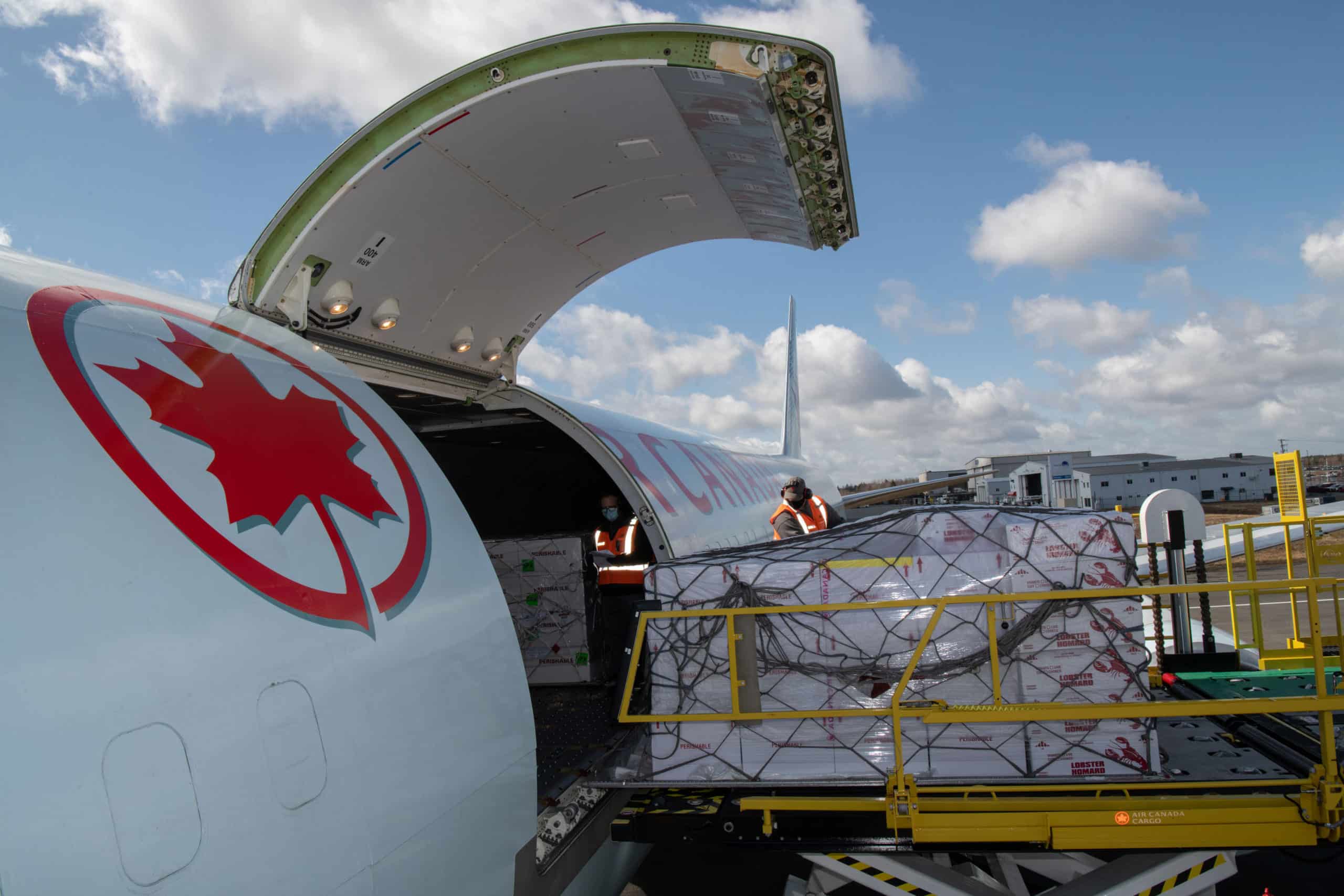
Air Canada sees access to sustainable aviation fuel (SAF) as its No. 1 challenge and looks to future technology to support its sustainability goals, said Mohamed Haj Ali, manager for environmental processes and programs at Air Canada.
Areas to decarbonize
Beyond reducing Scope 3 emissions generated by flying, stakeholders should also consider the negative environmental effects of single-use plastics, wildlife trafficking, and food and water waste management, Godson added.
Plastic is one area in which the industry needs to reduce use but lacks solutions.
Plastics are a key component in fuel efficient airframes and in cabin equipment, Godson said.
“We are seeing the rapid introduction of unharmonized regulation[s] that do not appreciate airline constraints in terms of security and safety and do not appreciate transport-related emissions associated with alternatives,” he added. “We are seeing a lack of credible, affordable and sustainable alternatives.”
Sustainability investments also vary across sectors in the aviation industry, where airports are investing more into infrastructure and training than ground handlers, Leon said.
EMS solutions
To help aviation stakeholders monitor the impact of their environmental efforts, IATA introduced its IATA Environmental Assessment (IEnvA) for airlines to have a better scope of its changes. IEnvA is an environmental management system (EMS) based on best practices and that complies with the international standard for EMSs (ISO14001), Leon said.
Having an EMS can help organizations coordinate sustainability efforts across sectors, create better visibility and tracking into resources and performance, establish verifiable commitment to sustainability and increase public confidence in the company. An EMS also creates data for quantitative measurement and can enable better environmental social and governance (ESG) reporting.
Air Canada has been IEnvA certified since 2020 and renewed its certification this year, Ali said. The airline has seen benefits in identifying and mitigating environmental risks, creating top-down leadership policies and establishing its environmental vision.
“When you think about environmental management systems, it is the very bare minimum requirements that helps you within your company to be able to address environmental risks of your activities,” Ali said. “Think about it more [as] housekeeping … you get your house organized so you’re able to deliver programs.”
Expanding membership
IATA has 50 airline members in IEnvA with around 36 fully certified, including Air Canada, Air New Zealand, Qatar Airways and Turkish Airlines, Leon said. Membership has grown 300% year over year, and IATA has coordinated 70 internal assessments with its auditors.
IATA plans to expand its IEnvA solutions to airports and ground service providers soon, while adding catering companies and maintenance, repair and overhaul groups by 2024. Qatar Aviation Services is the first ground service provider to join the program and Edmonton Airport (YEG) the first airport.
“The scale and complexity of this task is daunting, but dialogue is vital to ensure that aviation is not deemed as a brown or unsustainable investment activity,” Godson said.


Cargo Facts Free Newsletters